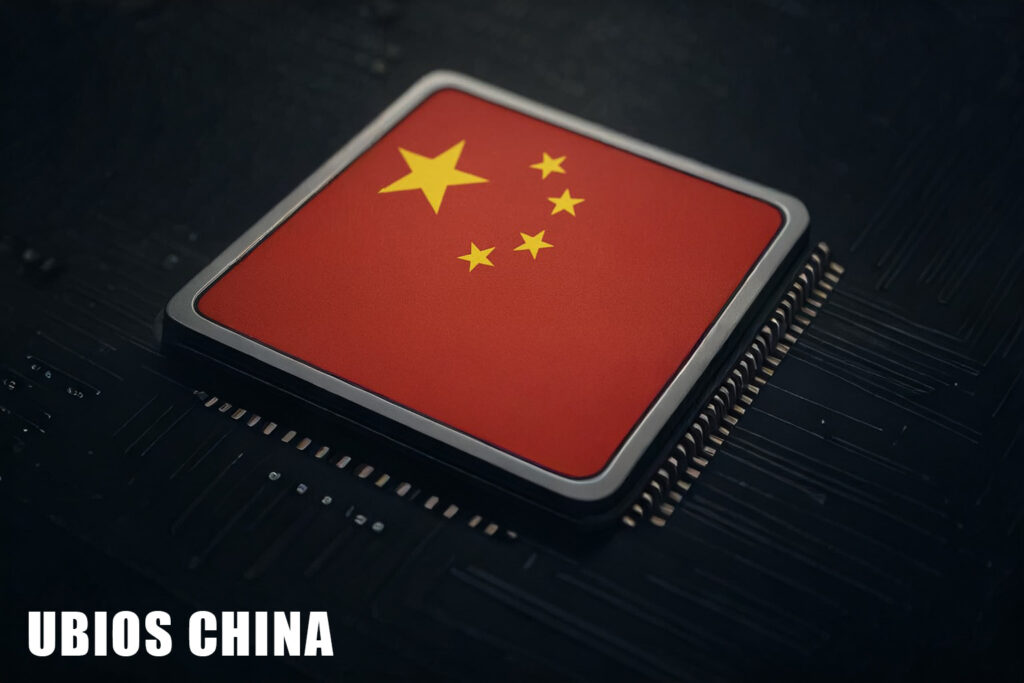
UBIOS China: The New BIOS Revolution Redefining System Firmware
In the fast-evolving world of computing, firmware the invisible layer that connects hardware and software plays a critical role in how systems start, communicate, and perform.
For decades, the global tech industry has relied on Western standards such as BIOS and UEFI, both originally developed by American giants like Intel and Microsoft, forming the foundation of nearly every modern computer.
However, in a bold and strategic move, China has announced the launch of its own national firmware standard, known as UBIOS, according to several trusted sources including RedHotCyber and Igor’s Lab.
The goal is clear to reduce dependence on Western technology standards like UEFI and to rebuild a completely independent computing ecosystem within China.
UBIOS, short for Unified Basic Input/Output System, is more than just a replacement for BIOS or UEFI. It represents a complete redesign from the ground up, built to support China’s growing hardware ecosystem that includes diverse processor architectures such as LoongArch, ARM, and RISC-V, as highlighted by GameGPU.
This initiative is part of a broader vision of achieving technological sovereignty, ensuring that China’s computing infrastructure remains secure, scalable, and domestically developed a goal emphasized in a report by Tek.Sapo.pt.
UBIOS could redefine how future computers boot, communicate, and function, marking the beginning of a new era where each global power builds its own end-to-end technology stack from the processor to the firmware itself.
What Is UBIOS?
UBIOS stands for Unified Basic Input/Output System a new low-level firmware responsible for initializing computer hardware during startup, just like UEFI or BIOS.
However, unlike those, UBIOS was developed entirely from scratch under Chinese national standards.
It was introduced by the Global Computing Consortium (GCC) and officially documented under the code T/GCC 3007-2025, making it China’s first national firmware standard.
Why Did China Develop UBIOS?
China viewed the dependency on Western firmware standards, particularly UEFI (originally designed for x86 processors by Intel and AMD), as a form of technological reliance.
UBIOS was created to achieve three key goals:
- Technological Independence: reducing reliance on Western computing standards.
- Architectural Flexibility: supporting multiple CPU architectures such as x86, ARM, RISC-V, and LoongArch (China’s own architecture).
- Better Efficiency and Security: providing a lighter, faster, and more secure firmware design compared to UEFI.
Technical Features and Key Improvements
UBIOS represents a major leap forward in firmware technology. Here are some of its notable improvements:
- Multi-architecture Support: Works seamlessly with diverse processors without heavy customization.
- Distributed Architecture: Enables more flexible hardware management, particularly useful for servers and AI systems.
- Lightweight and Faster Booting: Streamlined boot process reduces startup time.
- Enhanced Security: Expected to include a robust verification system similar to or stronger than UEFI’s Secure Boot.
- Scalability: Designed for future hardware developments, including chiplet-based processors and heterogeneous computing.
Impact on the Global PC Industry
UBIOS is not just a firmware update it’s a strategic shift with both technical and geopolitical implications.
In the coming years, we may see Chinese motherboards and processors built entirely around UBIOS, reshaping global hardware production and compatibility standards.
For developers, engineers, and tech professionals, this change could mean:
- Adjusting operating system compatibility and driver development.
- New opportunities to build tools optimized for Chinese hardware.
- Potential challenges in cross-platform integration with global systems like Windows or Linux.
Operating System Support
So far, Microsoft has not officially commented on UBIOS support.
However, Chinese Linux distributions are reportedly already working on full compatibility, signaling China’s intent to create a fully independent computing ecosystem from the hardware layer to the operating system.
Conclusion
UBIOS marks a turning point in both Chinese and global computing history.
It’s not merely a technical alternative to UEFI it’s a strategic foundation for China’s digital sovereignty and an important step toward a fully homegrown computing ecosystem.
In an age where technology defines power, China’s move with UBIOS shows its determination to control every layer of its computing stack from the processor to the firmware and beyond.